
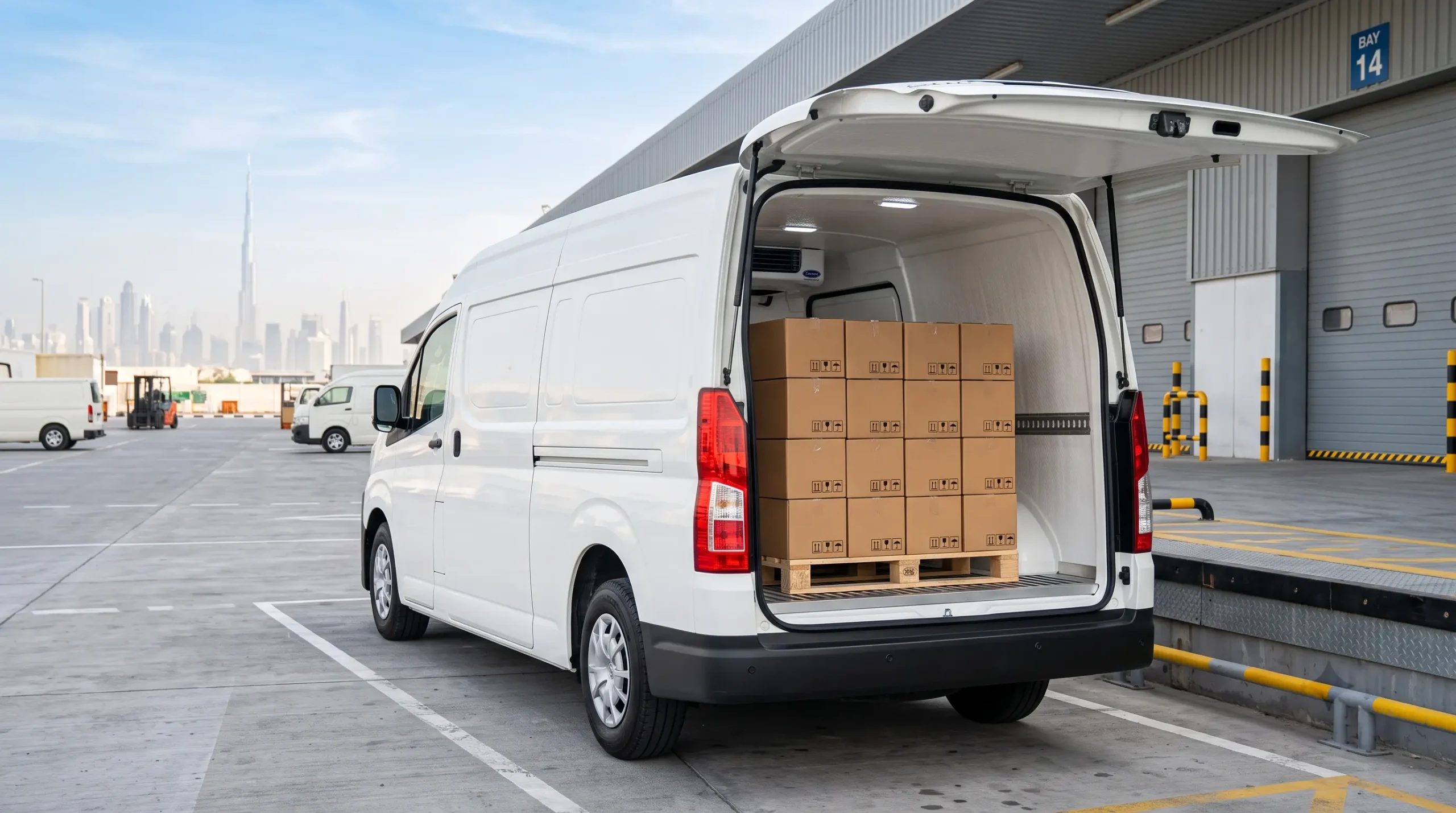
How to Load a Chiller Van Correctly for Deliveries in Dubai
Correctly loading a chiller van is about more than fitting every box inside. The load must remain within the vehicle’s payload, allow cold air to circulate and be arranged so the driver can complete the route without leaving the doors open longer than necessary.
This is especially important during deliveries in Dubai, where warm outside air can enter the cargo compartment whenever a door is opened. A suitable vehicle helps maintain the required conditions, but the way the goods are prepared, loaded and unloaded also affects the result.
Cool Track Transport provides 1-ton chiller vans operating from 0°C to +8°C for chilled deliveries across Dubai. The exact transport temperature should always be based on the product supplier’s written requirements. A chiller van is designed to maintain chilled cargo during transport; it should not be treated as equipment for rapidly cooling warm goods.
This guide explains the main steps customers, loaders and drivers should consider before dispatch.
1. Confirm the Product’s Required Temperature
Different chilled products may require different transport conditions. Do not select a temperature because it is commonly used for another product.
Before booking or loading, confirm:
- The required transport temperature
- Whether the product is chilled or frozen
- Any maximum allowable temperature deviation
- Packaging and handling instructions
- Whether different products can travel together
- Whether monitoring records are required
Cool Track’s chiller vans operate from 0°C to +8°C. Goods requiring a sub-zero transport temperature need an appropriate freezer vehicle instead. When the customer is unsure, the product manufacturer, supplier or responsible food-safety professional should define the required conditions.
2. Prepare the Cargo Before the Van Arrives
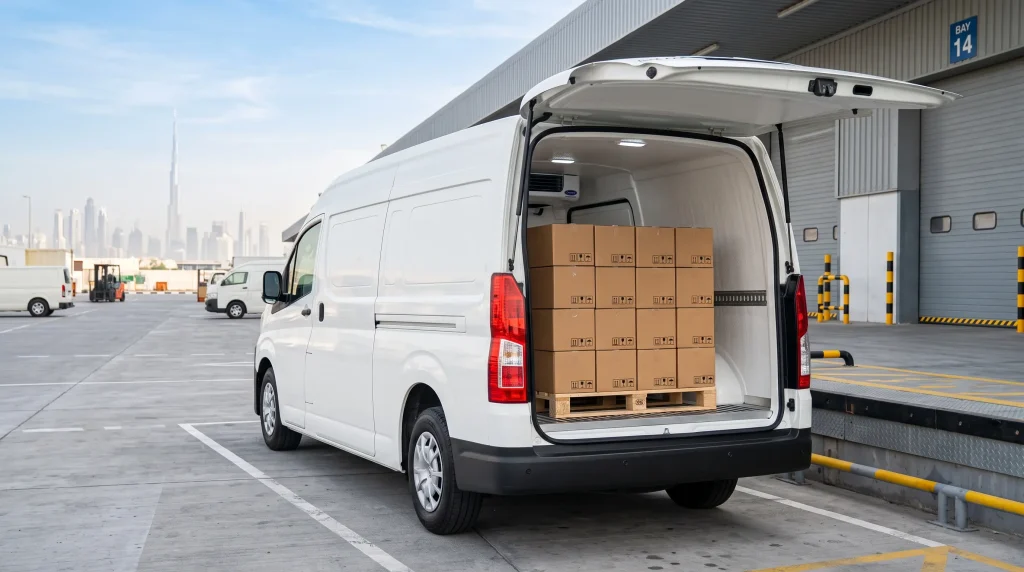
Loading should begin only when the shipment is packaged, labelled and ready to move. Sorting boxes while the cargo doors remain open allows more outside air into the compartment and extends the loading period.
Before arrival, customers should:
- Complete packing and sealing
- Separate chilled goods from non-chilled goods
- Label the boxes clearly
- Group products by delivery stop
- Confirm the total weight and dimensions
- Prepare pallets or handling equipment where required
- Make sure the loading area is accessible
Damaged, leaking or poorly sealed packages should be corrected before loading. If one package could contaminate another, the products should not be placed together without appropriate separation and handling controls.
3. Make Sure the Goods Are Already at the Required Temperature
A refrigerated transport vehicle is generally intended to maintain product temperature, not remove a large amount of heat from warm cargo. Loading warm products can increase the thermal load and make it harder to maintain the intended conditions throughout the delivery.
Customers should check the product temperature according to their own documented procedure before loading. If pre-cooling is required, it should take place using suitable cold-storage or product-cooling equipment before the goods enter the van.
The Food and Agriculture Organization explains that refrigerated transport vehicles are generally designed to keep products cold and that warm produce should be pre-cooled appropriately before refrigerated transport.
4. Inspect the Cargo Compartment
Before loading, check that the cargo area is suitable for the planned shipment. The inspection should cover:
- General cleanliness
- Unwanted odours
- Residue or packaging from an earlier load
- Visible floor, wall or door damage
- Condition of door seals
- Clear refrigeration outlets and return-air paths
- Secure shelves, restraints or other fittings
- Any visible sign of water leakage or excessive ice
The vehicle should be cleaned using the operator’s documented process and any requirements applicable to the cargo. Do not load food into a compartment that is visibly dirty or could contaminate the shipment.
5. Pre-Cool the Cargo Compartment When Required
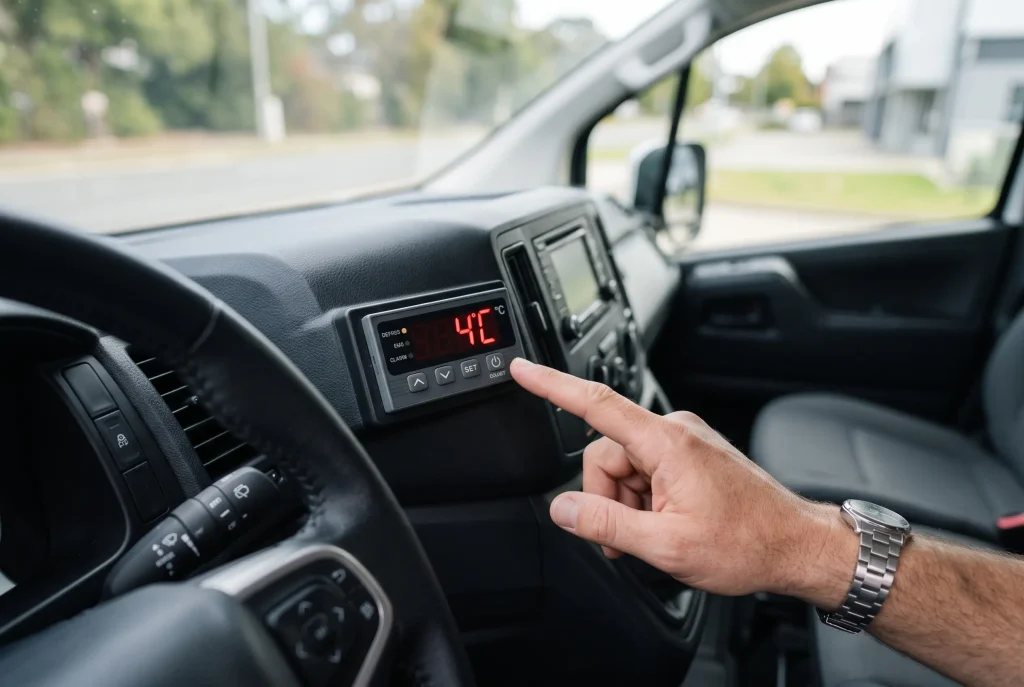
Where the operating procedure requires it, the empty cargo compartment should be brought toward the selected temperature before loading begins. The target setting must match the cargo requirement and remain within the vehicle’s operating range.
Pre-cooling an empty van is not the same as cooling warm products. The cargo itself should already be at its required condition before dispatch.
Before loading, the operator should check:
- The temperature setting
- The displayed compartment temperature
- Whether the refrigeration system is operating normally
- Whether any alarm or warning is present
Do not publish a fixed pre-cooling time unless Cool Track has measured and documented it. The time can vary with the starting temperature, vehicle, ambient conditions and operating procedure.
6. Stay Within the One-Ton Payload
Cool Track’s chiller vans carry up to 1 ton. The shipment must remain within the verified payload and fit within the cargo compartment without blocking airflow.
Weight is not the only consideration. A load may weigh less than 1 ton but still be unsuitable if:
- The boxes are too large for the cargo space
- The load blocks refrigeration outlets
- The cargo cannot be restrained safely
- The weight cannot be distributed appropriately
- The delivery requires pallets or equipment better suited to a truck
Provide the cargo weight and dimensions when requesting a quote. For a heavier, palletized or higher-volume chilled load, a 3-ton chiller truck may be more appropriate.
7. Leave Space for Cold-Air Circulation
Cold air needs a clear path around the load. Packing boxes tightly against refrigeration outlets, return-air paths, the ceiling or the walls can create uneven conditions inside the compartment.
The exact loading clearance depends on the vehicle’s refrigeration design and body configuration. Follow the vehicle manufacturer’s loading guidance and Cool Track’s operating procedure rather than using an invented universal distance.
As a general loading principle:
- Keep refrigeration outlets unobstructed
- Do not block the return-air path
- Avoid pressing packages against the evaporator or cooling unit
- Arrange cartons so air can move around the load
- Do not overload the highest part of the compartment
- Keep loose packaging from being drawn toward the cooling unit
The FAO also identifies airflow around the product as an important factor in refrigerated operations. A correctly selected temperature cannot compensate for a load that prevents air circulation.
8. Distribute and Secure the Load
Cargo should be arranged so it remains stable during braking, turning and normal road movement. Heavy items should not be placed where they could crush lighter packages or create an unstable load.
Consider:
- Even weight distribution
- Suitable restraints or load-securing equipment
- Package strength and stacking limits
- Keeping aisles or access points clear where required
- Protecting fragile goods from movement
- Using the tail lift safely when the selected vehicle and load require it
A tail lift assists with loading and unloading, but it does not remove the need to confirm cargo weight, dimensions, equipment limits and safe handling arrangements.
9. Load According to the Delivery Route
For a multi-stop route, the loading order should reduce searching and unnecessary door-open time.
A practical approach is to:
- Confirm the delivery sequence before loading.
- Place the final-stop goods deeper in the compartment.
- Position the first-stop goods where they can be accessed without moving unrelated cargo.
- Label each order clearly.
- Keep the route list available to the driver.
- Re-secure the remaining load after each stop when necessary.
Route-based loading can shorten each unloading period and reduce repeated handling. It can also lower the risk of delivering the wrong order at a busy restaurant, hotel, shop or event location.
10. Keep Door-Opening Time as Short as Practical
Every door opening allows warm outside air to enter. Before opening the cargo doors at a delivery point, the recipient and unloading area should be ready.
Useful practices include:
- Confirming that the customer is ready to receive the order
- Preparing a trolley or pallet equipment in advance
- Opening only the door needed for access, where the design allows
- Removing the correct order without rearranging the entire load
- Closing the doors promptly after unloading
- Avoiding unnecessary inspections with the doors open
Do not promise that the compartment temperature will never change. The goal is to follow a controlled process, reduce unnecessary exposure and respond according to the relevant operating procedure.
11. Monitor the Journey
Cool Track vehicles have GPS available, which supports route visibility. GPS location tracking should not automatically be described as product-temperature logging unless the vehicle has a separate verified temperature-recording system.
During transport, the responsible operator should follow the applicable monitoring procedure, including:
- Checking the temperature display where required
- Watching for equipment warnings
- Keeping doors closed between stops
- Following the planned Dubai route
- Reporting delays or refrigeration concerns
- Recording information when the customer’s process requires it
If a temperature deviation occurs, follow the documented escalation process. Do not declare the cargo safe or unsafe based only on a quick visual inspection; the responsible customer or food-safety professional should assess it using the product requirements and available records.
12. Check and Clean the Van After Unloading
After the final delivery, remove packaging material, inspect the cargo compartment and complete the appropriate cleaning procedure before another load is accepted.
The required method depends on what was transported and whether there was leakage, damage or contamination. Cleaning products should be suitable for the vehicle surfaces and intended use, and they should be used according to their instructions.
A post-delivery check can identify:
- Spills or residue
- Damaged interior surfaces
- Door-seal problems
- Loose restraints or fittings
- Packaging left behind
- Unusual odours
- Refrigeration-system warnings
Chiller Van Loading Checklist
Use this short checklist before dispatch:
| Check | Complete? |
|---|---|
| Required product temperature confirmed | ☐ |
| Goods packaged, labelled and ready | ☐ |
| Cargo already at the required condition | ☐ |
| Compartment inspected and clean | ☐ |
| Correct temperature selected | ☐ |
| Total load is within the 1-ton payload | ☐ |
| Refrigeration outlets and return-air paths are clear | ☐ |
| Weight distributed and cargo secured | ☐ |
| Boxes arranged in delivery-stop order | ☐ |
| Recipient and unloading equipment prepared | ☐ |
| Monitoring and escalation process understood | ☐ |
Frequently Asked Questions
Can a chiller van cool warm products after loading?
A chiller van is primarily used to maintain cargo already at its required chilled condition. Customers should pre-cool products using an appropriate method when required rather than depending on the transport vehicle to remove a large amount of product heat.
How much can a Cool Track chiller van carry?
Cool Track’s chiller vans carry up to 1 ton. Cargo dimensions, airflow, weight distribution and loading method must also be considered before confirming suitability.
What temperature does the chiller van maintain?
Cool Track’s chiller vans operate from 0°C to +8°C. The correct setting depends on the product’s written transport requirements.
Can I fill every available space with boxes?
No. The load must remain within the payload and leave the refrigeration outlets and air-return paths clear. Follow the vehicle-specific loading guidance so air can circulate around the cargo.
Can I rent a chiller van with or without a driver?
Yes. Cool Track offers chiller vans with or without a driver. Confirm the rental arrangement, date and availability when requesting a quote.
Are GPS and a tail lift available?
GPS is available across the fleet, and tail-lift vehicles are available. Confirm the appropriate vehicle and equipment for the cargo when booking.
When should I choose a chiller truck instead?
Choose a chiller truck when the cargo exceeds the van’s payload or dimensions, is palletized, or requires more loading space or equipment. Cool Track offers 3-ton chiller trucks operating from 0°C to +8°C.


